
Cullen Bunn on The 6th Gun
His long running Oni Press series!

Excited to chat with Cullen again today about The 6th Gun. This is the fourth in our series of interviews which will slowly cover his lengthy career.
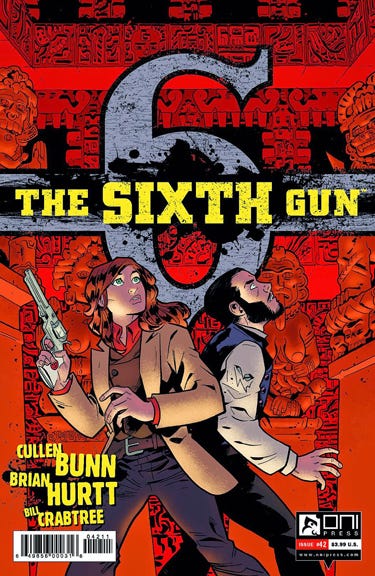
If you are unfamiliar with The 6th Gun here is what it’s all about: During the darkest days of the Civil War, wicked cutthroats came into possession of six pistols of otherworldly power. In time the Sixth Gun, the most dangerous of the weapons, vanished. When the gun surfaces in the hands of an innocent girl, dark forces reawaken. Vile men thought long dead set their sights on retrieving the gun and killing the girl. Only Drake Sinclair, a gunfighter with a shadowy past, stands in their way.
Thanks for reading! Subscribe for free to receive new posts and support my work.
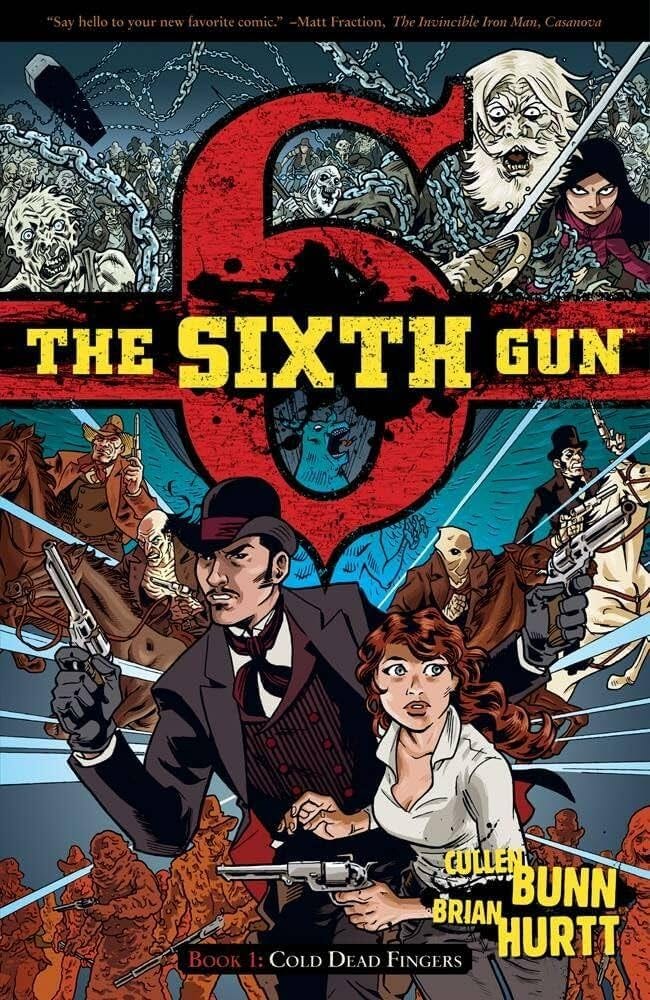
Austin Allen Hamblin: Growing up, my dad and grandpa watched Westerns nonstop. None of them had all the supernatural craziness of The 6th Gun. Was that the reason you and Brian made it?
CB: I’ve been a huge fan of supernatural westerns for a long, long time. One of my favorite annual reads is Dead in the West by Joe R. Lansdale. I loved the old DC weird westerns as well as Lansdale’s Jonah Hex arcs, which embraced the supernatural. And I was a fan of movies like The Outlaw Josey Wales (which I consider the perfect Jonah Hex movie) and Dead Man, which was a great weird western.
The very first short story I sold, waaaaaay back in the 90s, was “The Followers of the Serpent.” This was a cosmic horror western heavily inspired by Lansdale’s work.
So, it was just a matter of time before my thoughts drifted to a weird western comic book series.
Holy cow! Thinking about it right now, I realize The Sixth Gun wasn’t the first weird western comic I tried to put together. The first was called Kid Bedlam or something like that, and it was sort of a Jonny Quest in the Old West kind of story. I had almost completely forgotten that!
AAH: Did you grow up watching or reading Westerns?
CB: I definitely watched a bunch of westerns. The aforementioned Josey Wales. All the Man With No Name movies. High Plains Drifter. The Searchers. The Shootist. Young Guns and Silverado, of course!
As a little kid, I watched Wild, Wild West every afternoon, and I loved it.
Outside of comics, I read a few westerns growing up, but not a lot. I stumbled into a few Louis L’amore books every now and then.
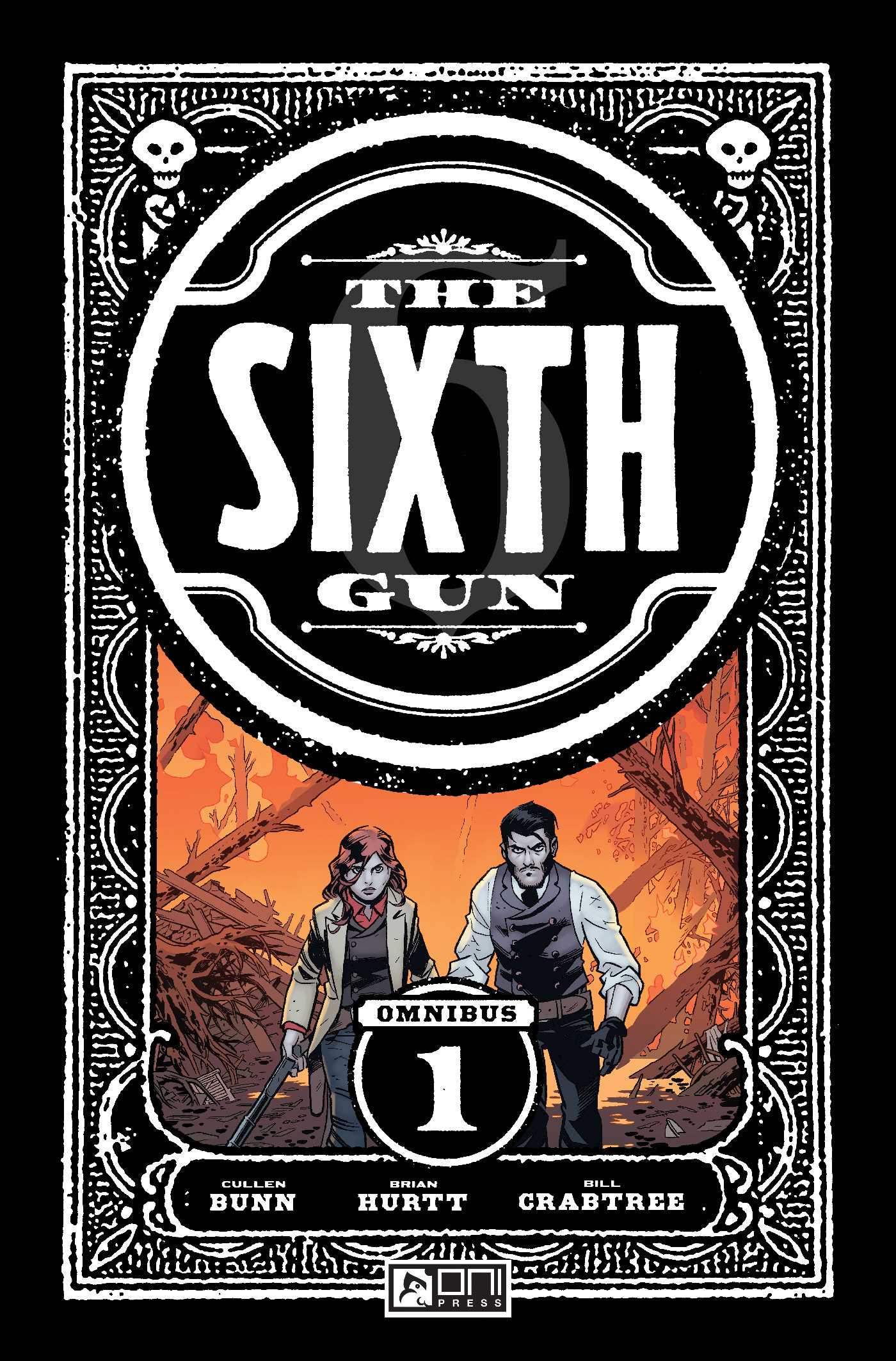
AAH: Writing stories with large casts of characters is hard to pull off. You want to make sure everyone is fleshed out and sticks out in some way. You really accomplished that in The 6th Gun. How did you keep track of everyone and make that happen?
CB: I didn’t have a very complicated process, to be honest. Each character had a page of scribbled notes in one of my notebooks. It detailed where they started, what they wanted, where they were going, and how their stories might wrap up in the end. The notes were rather loose, because I wanted to give myself room to change things as needed.
AAH: What makes the wild west such a great setting to tell a story?
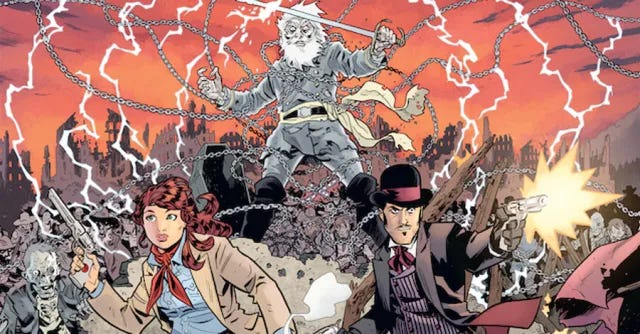
CB: With The Sixth Gun, we embraced the Old West setting. We used it for all it was worth. But we also played against expectations again and again. Setting a western in a swamp… or underground cities… or frozen wastelands… just isn’t what readers would have seen coming. When there are knights and dragons and mystery mummies roaming around, you know this isn’t your grandma’s western. That is something that might be overlooked… how exciting it can be to have a setting with built in expectations that you can twist into something new.
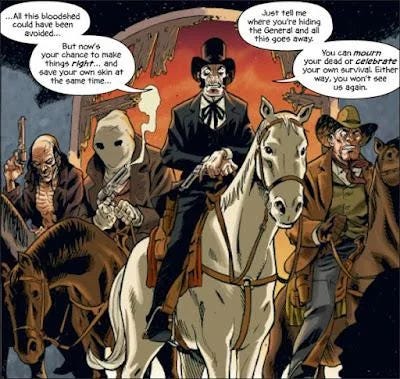
AAH: You use Wendigos in The 6th Gun, which I feel are underutilized, but terrifying creatures. What made you want to use them?
CB: I guess I feel like you do. They are underutilized. Used the right way, they can be terrifying. I also felt that the wendigo worked in the setting but might also feel surprising and unexpected. I think, though, I also just thought Brian would draw something amazing when it came to the wendigo.
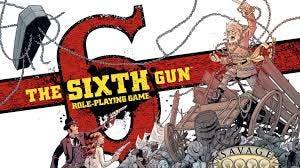
AAH: What did the collaborative process with artist Brian Hurtt look like?
CB: Brian and I spend a lot of time brainstorming stories, sometimes in a very high level way, sometimes with a little more detail. We’d do that before I started writing every arc. Then, I’d just jump into scripting, not letting Brian see script pages until the issue was done. I always wanted to see if I could surprise him… with how I wrote certain scenes or if I added elements we hadn’t discussed. I always want to keep things exciting for him.
After he reads the script, he jumps into drawing. Sometimes, though not always, he will give me a call to discuss new ideas he might have for how to draw a particular sequence or the like.
But I usually don’t see the pages until he is done.
There’s a lot of trust there. He trusts me to write the best script I can. I trust him to draw the Hell out of it.
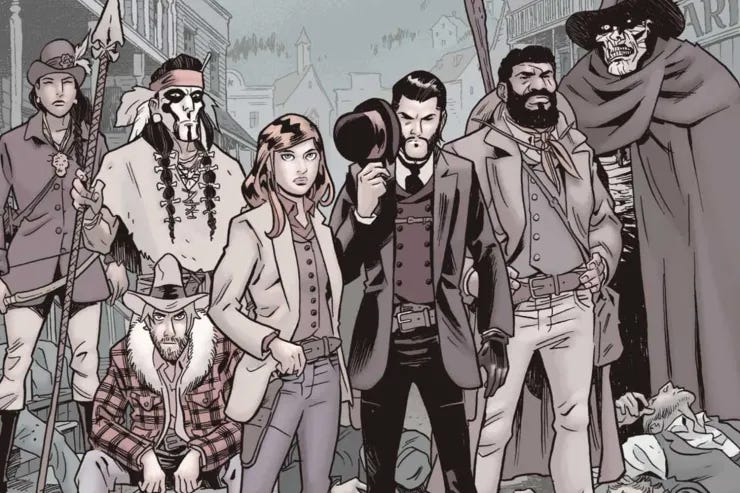
AAH: When you started making the book, did you think it would go on as many issues as it has?
CB: We weren’t sure how many issues we’d get. Originally, we knew would get six issues, but we also knew we wanted more. Once we got greenlit for a second arc, we had a thought that we might get 20 or so issues. Once we got into the third arc, we started thinking about how we would want to end the series and where. We talked about 36 issues for a while, but we knew we wanted more. So, we settled on 50 issues with a few extra-size issues and limited series tie-ins. Honestly, we could have kept going for many, many more issues.
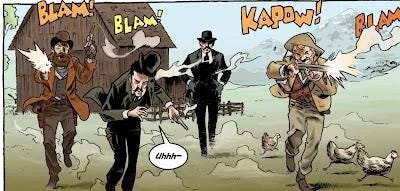
AAH: What are some of your favorite westerns?
CB: I mentioned The Outlaw Josey Wales and Dead Man. Some others include Unforgiven and Tombstone. I feel like there is one I’m not remembering at the moment that should get mentioned, but it is slipping my mind.
AAH: How can people follow your work?
CB: I have a link tree that will point you to all the places you can follow my work. It is https://linktr.ee/cullenbunn . My website (www.cullenbunn.com) is a great starting point, too. I have a long-running weekly newsletter that I’m pretty proud of. You can check it out at
And I have a video podcast called The Cullenoscopy where I discuss all things horror. You can watch at https://youtube.com/@thecullenoscopy?si=tvCQBDbdkyXZVglQ
AAH: Until next time, reporting from a corn field in Iowa, Austin Allen Hamblin is returning to his cave. Did you know I also write comics? I also do comics journalism for Comic Book Resources. If you are interested in following my work, you can find all that info out here: https://linktr.ee/austinallenhamblin